

Unbuffered magnesium glycinate: better sleep, easier recovery, gentler on your stomach
17th Aug 2026
Magnesium is one of the most important minerals your body uses every day. It’s a cofactor in over 300 processes, from energy production to muscle recovery to the nervous system pathways involved in falling asleep. An estimated 2.4 billion people worldwide don’t get enough from food alone.¹
Among the many forms available, magnesium glycinate has become the most popular for daily use – not because it contains more magnesium per capsule (it doesn’t), but because of how it behaves in your body: it’s gentle on the stomach, well tolerated, and it is paired with glycine, an amino acid with its own calming properties.
But most magnesium glycinate on the market isn’t pure. This article explains what that means, why it matters for your sleep and recovery, and what the evidence actually says.
What magnesium glycinate is
Magnesium glycinate (also called magnesium bisglycinate) is magnesium bonded to two molecules of glycine, an amino acid. That makes it a chelated form – the magnesium is bonded to an amino acid rather than sitting as a simple mineral salt.
Why does the glycine matter?
Glycine has calming properties of its own – it acts on the nervous system's 'slow down' pathways, and clinical studies show it independently supports sleep quality.2 In a clinical study, 3g of glycine* before bed substantially reduced subjective time to fall asleep and improved sleep efficiency. Objective sleep measurements confirmed the findings.3 Glycine has also been shown to reduce next-day fatigue and improve reaction time in people who didn’t get enough sleep the night before.4
Beyond sleep, it’s the most abundant amino acid in collagen and a building block for creatine – both relevant to muscle recovery.
The other reason magnesium glycinate stands out: it is consistently described in clinical research as the gentlest, least laxative oral magnesium form available.5,6 Magnesium glycinate is consistently reported to cause fewer digestive side effects than oxide or citrate. Oxide and citrate are well known to draw water into the bowel and cause loose stools; glycinate doesn't produce this effect to the same degree.
* Note: these studies used 3g of glycine; this product provides approximately 860mg per serving – a complementary amount, not a standalone clinical dose.
Buffered vs. unbuffered: the core distinction
Most magnesium glycinate on the market isn’t pure. It’s “buffered” – meaning other forms (like magnesium oxide) are blended in to push the elemental magnesium number higher on the label.
The trade-off isn’t just what’s on the label.
Oxide is known to cause loose stools and digestive discomfort.6
Citrate also has a well-documented laxative effect.6 And neither oxide nor citrate contributes glycine.
Unbuffered magnesium glycinate is the pure chelated form. All of the magnesium is bonded to glycine. Nothing else added.
Difference between Buffered and Unbuffered Magnesium Glycinate
|
Buffered magnesium glycinate |
Unbuffered |
|
|
What’s in it |
Magnesium glycinate mixed with other forms of magnesium |
100% magnesium glycinate, nothing added |
|
The number on the label |
Looks higher – the added magnesium form inflates it |
Looks lower, but reflects what’s actually in the capsule |
|
On your stomach |
Can cause loose stools – oxide acts as an osmotic laxative |
The gentlest form — no loose stools, no digestive discomfort common with oxide or citrate |
|
The glycine bonus |
Other forms add no amino acid |
Chelated form – delivers both magnesium and glycine |
|
Price |
Usually cheaper |
Usually costs more |
FYI "Buffered" is an industry term, not a classification required by any health authority. The only reliable way to know what you’re getting is to read the label carefully.
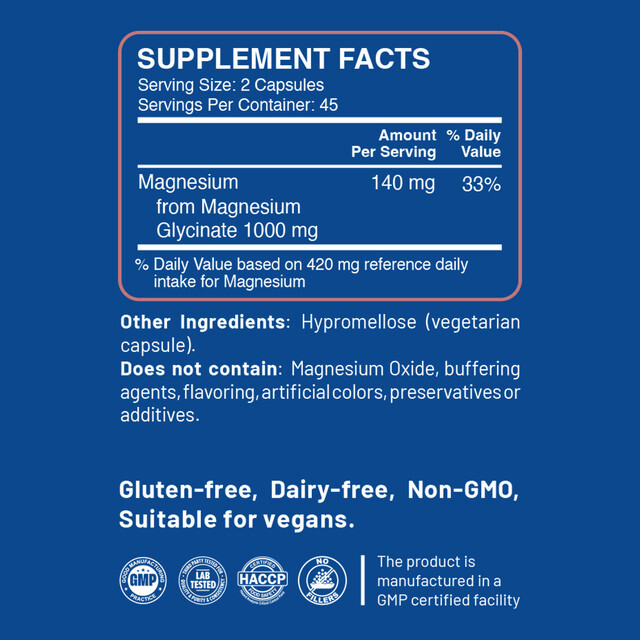
How to spot a buffered product
Check the Supplement Facts panel.
If a single capsule of “magnesium glycinate” claims 100mg or more of elemental magnesium, magnesium oxide is almost certainly blended in – pure glycinate can only deliver about 14% elemental magnesium by weight. Look for “Does not contain magnesium oxide” on the label.
Why form matters: magnesium forms compared
Magnesium oxide: the cheapest form. High elemental magnesium by weight, but can cause loose stools, particularly at higher doses. Most commonly blended into buffered glycinate products.
Magnesium citrate: better tolerated than oxide but still has a laxative effect. Commonly used for digestive regularity.
Magnesium L-threonate: a newer form designed to cross the blood-brain barrier, marketed primarily for brain health. More expensive and delivers less elemental magnesium per dose.
Magnesium glycinate: the gentlest, least laxative form available, observed to cause fewer digestive side effects than oxide or citrate. For daily use, targeting sleep, recovery, and nervous system support.
Why most people need to supplement magnesium
Magnesium is one of the most important minerals for our health. It is a cofactor in over 300 enzymatic reactions.7 It supports energy production, protein synthesis, blood sugar regulation, blood pressure maintenance, cardiac rhythm, and the nervous system pathways involved in stress and relaxation.7
Good dietary sources include dark leafy greens (spinach, Swiss chard), pumpkin seeds, almonds, cashews, black beans, dark chocolate, avocado, and whole grains – but even a well-balanced diet often falls short of the recommended intake, especially with modern farming and food-processing methods.
But 1 in 3 of us don't get enough of it through diet alone. A 2024 modeling analysis published in The Lancet Global Health estimated that approximately 2.4 billion people worldwide – roughly 31 percent of the global population – have inadequate magnesium intake from food alone.1 It is one of the most common nutritional gaps globally.
When levels run low, the effects are often subtle at first – poor sleep, fatigue, muscle soreness, irritability.7 These are easy to dismiss as "just getting older." But they can also be signs that a foundational mineral is running short. And as we age, we tend to spend less time in deep, restorative sleep and more time in lighter stages,8 which makes magnesium's role in nervous system regulation even more relevant.
The recommended daily intake is 310 to 320 mg for women and 400 to 420 mg for men, from all sources combined.
This is where supplementation comes in – and why the form you choose matters.
What the evidence says
Sleep quality (magnesium):
In a randomised, double-blind trial, magnesium bisglycinate taken daily for four weeks reduced insomnia severity by 28%, compared with 18% in the placebo group. The effect was modest and most pronounced in participants with lower baseline dietary magnesium.9
In a study of nearly 4,000 adults, higher magnesium intake was associated with better sleep quality and a lower likelihood of short sleep duration.10 In a smaller trial, magnesium supplementation improved sleep efficiency, insomnia severity scores, and how quickly participants fell asleep and how long they stayed asleep, compared to placebo.11
Sleep quality (glycine):
In a clinical study, 3g of glycine before bed substantially reduced time to fall asleep and improved sleep efficiency, confirmed by polysomnographic measurements.3
In sleep-restricted adults, glycine significantly reduced next-day fatigue and improved reaction time.4
Note: these trials used 3g of standalone glycine; this product provides approximately 860mg per serving, roughly a quarter of the studied dose.
Muscle recovery:
In a double-blind study, magnesium glycinate reduced muscle soreness at 24, 36, and 48 hours after exercise, and significantly improved perceived recovery and reduced perceived exertion, compared to placebo.12
Physical performance. In a randomized trial of healthy elderly women (without placebo control), 12 weeks of magnesium supplementation improved physical performance measures, including chair-stand time and walking speed – particularly in women whose dietary magnesium was below recommended levels.13
Nerve and heart function. Magnesium is a required cofactor for nerve conduction, cardiac rhythm regulation, and blood pressure maintenance. These are well-established physiological roles.
Bone health. Magnesium contributes to bone density. In a small, early trial of postmenopausal women, those who completed two years of magnesium supplementation showed increased bone density – though the study had high dropout rates, limiting the strength of the finding.14 A larger cohort study found that low serum magnesium levels were associated with increased fracture risk.15
GI tolerability:
Magnesium glycinate is associated with less increase in bowel movement frequency than oxide or citrate, though it is not free of gastrointestinal side effects; some users report a sense of stomach heaviness.6
Why magnesium is part of your Biological Capital
Your body runs on systems that compound when managed and erode when neglected. Magnesium sits at the foundation of several of them – sleep architecture, energy metabolism, muscle recovery, nervous system regulation. These are not isolated functions. They are biological assets that determine how you perform, recover, and age across a decade.
When a mineral this fundamental runs short, the effects compound too – just in the wrong direction. Poor sleep undermines recovery. Poor recovery undermines performance. The deficit feeds itself.
This is why Biological Capital (Biocap) – the framework Xandro Lab built its protocols around – treats magnesium not as a nice-to-have supplement but as part of the infrastructure. You would not run a decade-long investment strategy with a structural gap in the foundation. The same logic applies to your biology.
Why we reformulated: from buffered to unbuffered
Our previous magnesium glycinate was buffered. It was a good product – we had already removed common fillers like rice powder. But like most magnesium glycinate on the market, it still contained magnesium oxide alongside the glycinate. That meant potential digestive discomfort from the oxide.
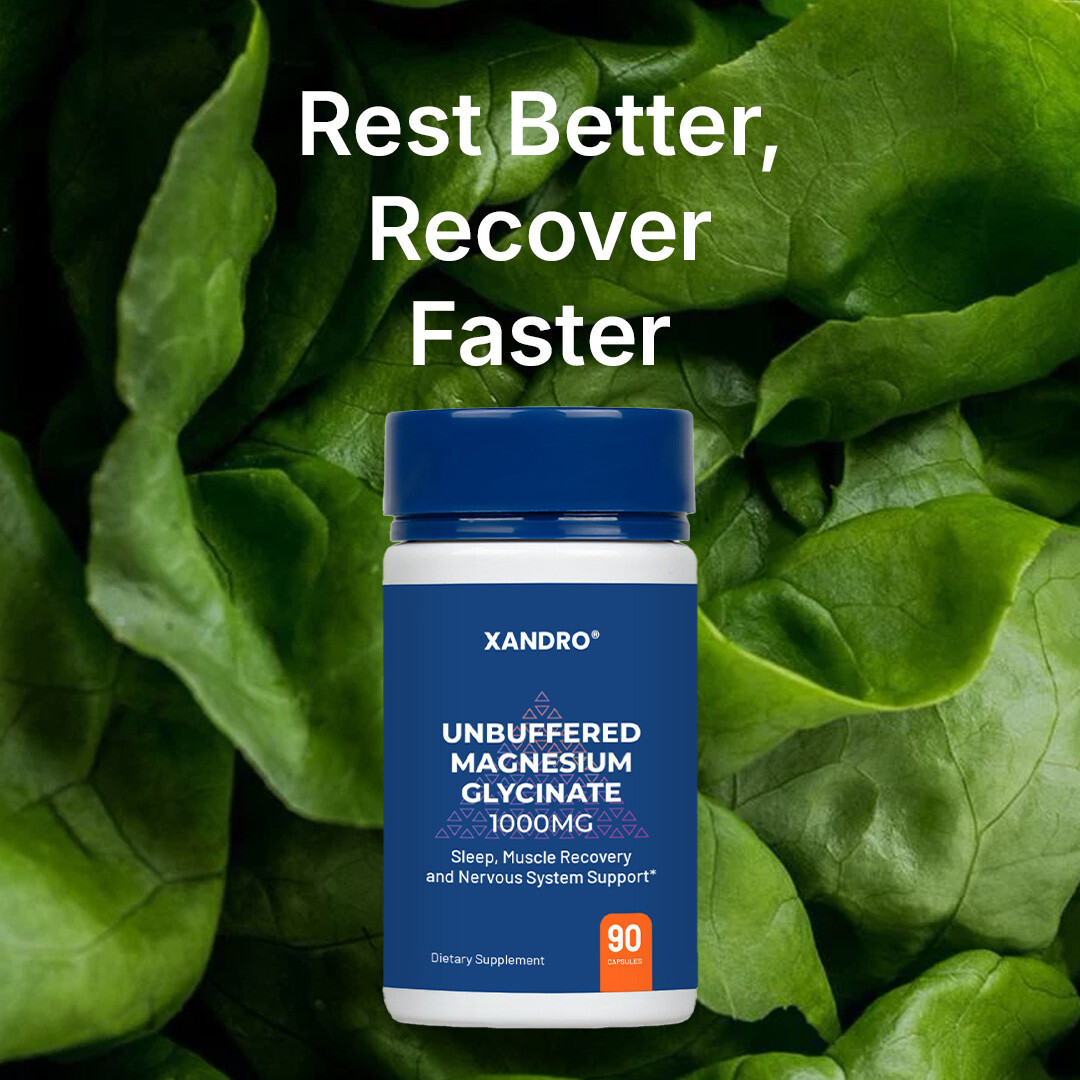
So we reformulated. XANDRO’s Unbuffered Magnesium Glycinate is now 100% magnesium glycinate – no magnesium oxide added. The gentlest form on your stomach, with every serving delivering both magnesium and glycine.
Here’s what is in the bottle:
- 1000 mg of unbuffered magnesium glycinate per 2-capsule serving
- 140 mg of elemental magnesium per serving (33 percent of the Daily Value)
- Only other ingredient: hypromellose (a vegetarian capsule)
- Does not contain magnesium oxide, buffering agents, rice powder, artificial colors, or preservatives
- Gluten-free, dairy-free, non-GMO, suitable for vegans
- 90 capsules per bottle, a 45-day supply
It is manufactured in our GMP-certified, HACCP facility in Singapore and independently third-party tested for purity, microbial safety, heavy metals, and disintegration. Lab results are published and available on request.
How to use it:
Take 2 capsules daily after food. If you are using it for sleep, 30 to 60 minutes before bed is ideal.
The bottom line
Magnesium is not optional. Your body uses it for hundreds of processes every day. Most people don’t get enough from food alone.
When you supplement, the form matters – not just for the number on the label, but for how it feels in your body. Magnesium glycinate is the gentlest, least laxative form available, and it’s consistently reported to cause fewer digestive side effects than oxide or citrate.
Buffered products blend in oxide to inflate the label number. That can mean digestive discomfort and no glycine benefit from the added portion. Unbuffered gives you only the chelated form: pure magnesium glycinate, nothing else.
Better sleep. Easier recovery. Gentle on your stomach. That’s the case for unbuffered.
If you’ve read this far, you know more about magnesium than most people who sell it.
Related reading
→ Everything to know about magnesium glycinate’s benefits
→ Side Effects of Magnesium and Benefits of Magnesium Glycinate
FAQ
What is the difference between magnesium oxide and magnesium glycinate?
Magnesium oxide has a high elemental magnesium content by weight but is poorly tolerated and also poorly absorbed. It acts as a laxative and can cause digestive discomfort. Magnesium glycinate has a lower elemental magnesium content per milligram but is the gentlest form available, and is consistently reported to cause fewer digestive side effects.
What does "unbuffered" magnesium glycinate mean?
It means the product contains only magnesium glycinate, with no magnesium oxide added. "Buffered" magnesium glycinate is a blend of glycinate and oxide, used to push the elemental magnesium number higher on the label.
How can I tell if my magnesium glycinate is buffered?
Pure magnesium glycinate can only deliver about 14 percent elemental magnesium by weight, roughly 70 mg from a 500 mg capsule. If a 500 mg capsule claims significantly more than that, magnesium oxide or another high-elemental filler is almost certainly in the blend.
Is buffered magnesium glycinate bad?
It’s not harmful, but it’s not what most people think they’re buying. The oxide portion can cause digestive discomfort.
Why is unbuffered magnesium glycinate more expensive?
The raw material is more expensive to produce, and you need more capsules per serving because the elemental magnesium per capsule is lower. Brands that invest in formulation quality also tend to invest in manufacturing quality – third-party testing, GMP certification, and transparent disclosure.
How much magnesium glycinate should I take?
The recommended daily intake for magnesium is 310 to 420 mg from all sources combined. Most people already get a portion from food. A supplement providing 100 to 200 mg of elemental magnesium per day is a meaningful contribution for most adults. If you suspect a significant deficiency, consult a healthcare professional.
When should I take magnesium glycinate?
For sleep support, 30 to 60 minutes before bed. For muscle recovery, after training. For general daily support, any time of day with food. Taking it with food supports absorption and reduces any chance of stomach discomfort.
Why does XANDRO use 140 mg of elemental magnesium if studies show 250 mg improves sleep?
The clinical trials on magnesium for sleep typically use 200 to 400 mg of elemental magnesium as a standalone intervention.9,11 XANDRO's 140 mg per serving is designed as a daily foundation, not a full clinical dose in isolation. Most adults already get magnesium from food, so this supplement bridges the gap rather than replacing your entire intake. If sleep is your primary goal, pair Unbuffered Magnesium Glycinate with Sleep On, which combines phytomelatonin, holy basil, and GABA for targeted, multi-pathway sleep support.
Can I take magnesium glycinate with other XANDRO products?
Yes. Magnesium Glycinate pairs well with most of the XANDRO range. It stacks naturally with Protocol X® (magnesium supports many of the same foundational pathways) and with Sleep On, if sleep is your primary goal, since they work through different mechanisms. No timing conflicts – take magnesium with food in the evening and follow each product's own usage instructions.
Can I take magnesium glycinate with other supplements?
Generally yes. Magnesium pairs well with most daily supplements. If you’re taking prescription medications – especially antibiotics, bisphosphonates, or blood pressure medication – consult your healthcare provider about timing, as magnesium can affect absorption of certain drugs.
This product is a health supplement. It is not intended to diagnose, treat, cure, or prevent any disease. Always consult a qualified healthcare professional before starting any supplement, particularly if you are taking prescription medications, managing a health condition, or are pregnant or breastfeeding.
REFERENCES
-
- Passarelli S, et al. Global estimation of dietary micronutrient inadequacies: a modelling analysis. Lancet Global Health. 2024;12:e1590–e1599. doi: 10.1016/S2214-109X(24)00276-6.
- Bannai M, et al. New therapeutic strategy for amino acid medicine: glycine improves the quality of sleep. J Pharmacol Sci. 2012;118(2):145–148. PMID: 22293292.
- Yamadera W, et al. Glycine ingestion improves subjective sleep quality in human volunteers, correlating with polysomnographic changes. Sleep and Biological Rhythms. 2007;5:126–131.
- Bannai M, et al. The effects of glycine on subjective daytime performance in partially sleep-restricted healthy volunteers. Frontiers in Neurology. 2012;3:61. PMID: 22529837.
- Blancquaert L, et al. Predicting and testing bioavailability of magnesium supplements. Nutrients. 2019;11(7):1663. PMID: 31330811.
- Pajuelo D, et al. Comparative clinical study on magnesium absorption and side effects after oral intake of microencapsulated magnesium (MAGSHAPE microcapsules) versus other magnesium sources. Nutrients. 2024;16(24):4367. doi: 10.3390/nu16244367.
- Schwalfenberg GK, Genuis SJ. The importance of magnesium in clinical healthcare. Scientifica. 2017;2017:4179326. PMID: 29093983.
- Dijk DJ, Duffy JF. Circadian regulation of human sleep and age-related changes in its timing, consolidation and EEG characteristics. Ann Med. 1999;31(2):130–140. PMID: 10344586.[1] [2]
- Schuster J, et al. Magnesium bisglycinate supplementation in healthy adults reporting poor sleep: a randomized, placebo-controlled trial. Nature and Science of Sleep. 2025;17:2027–2040. PMID: 40918053.
- Zhang Y, et al. Association of magnesium intake with sleep duration and sleep quality: findings from the CARDIA study. Sleep. 2022;45(4):zsab276. PMID: 34883514.
- Abbasi B, et al. The effect of magnesium supplementation on primary insomnia in elderly: a double-blind placebo-controlled clinical trial. J Res Med Sci. 2012;17(12):1161–1169. PMID: 23853635.
- Reno AM, et al. Effects of magnesium supplementation on muscle soreness and performance. J Strength Cond Res. 2022;36(8):2198–2203.
- Veronese N, et al. Effect of oral magnesium supplementation on physical performance in healthy elderly women. Am J Clin Nutr. 2014;100(3):974–981. PMID: 25008857.
- Stendig-Lindberg G, et al. Trabecular bone density in a two year controlled trial of peroral magnesium in osteoporosis. Magnes Res. 1993;6(2):155–163. PMID: 8274361.
- Kunutsor SK, et al. Low serum magnesium levels are associated with increased risk of fractures: a long-term prospective cohort study. Eur J Epidemiol. 2017;32(7):593–603. PMID: 28405867.
Tags: