

What your brain is built from and what happens when the raw materials run low
28th Jul 2026
If you care about your brain, you’ve probably thought about omega-3s. Maybe you take a fish-oil capsule. Maybe you eat salmon once or twice a week. Maybe you switched to krill oil because you read it was better absorbed.
Your instinct is right. But most of the conversation about omega-3 and the brain focuses on the wrong variable – how much you take. The more interesting question, and the one the research keeps circling back to, is what your brain is actually built from, and whether it is getting enough of the right material to stay sharp across decades.
The brain building material most people never think about: DHA
Your brain is one of the most lipid-rich organs in the body, and the most important omega-3 in its structure is DHA – the fatty acid woven into the membrane of every neuron. Each time you recall a name, hold a train of thought, or weigh a decision, that activity depends on signals passing quickly and cleanly between neurons – and DHA is part of what makes that possible.
The basic physiology is well established.1 When there’s enough DHA, neuronal membranes stay fluid and flexible. Receptors respond quickly. Signals move efficiently. Neurotransmitter release is precise.
When DHA runs low, those membranes become stiffer and less responsive. The proteins embedded in them – receptors, channels, release machinery – still work, but less efficiently. The result is not a dramatic failure. It is a gradual degradation, one that begins at a cellular level long before it shows up on a scan.
No study can measure what that feels like day to day. But the mental abilities most affected – memory, focus, the capacity to plan and prioritize – are the ones most people notice slipping first:
The difference between sharp recall and the name that hovers just out of reach. Between holding four priorities clearly in a meeting and losing the thread at three. Between sustaining focus through a complex afternoon and finding that the thinking has gone fuzzy by mid-afternoon.
The fog most people attribute to tiredness, stress, or simply getting older has, at least in part, a physical basis in the material the brain is built from.
DHA is not the only factor – sleep, stress, exercise, and vascular health all contribute – but it is the structural one, and it is the one most people never think to check.
Getting DHA into your bloodstream is not the same as getting it into your brain.
What the evidence says about DHA and brain structure
Two large population studies have looked at the relationship between omega-3 status and the brain – not in patients with dementia, but in healthy adults going about their lives.
Study 1. In 2012, researchers analyzing data from the Framingham Heart Study – one of the longest-running cardiovascular studies in the world – found that participants with a mean age of 67 who had the lowest red blood cell DHA levels also had measurably smaller total brain volumes. They scored lower on tests of visual memory, executive function, and abstract thinking, even though none of them had dementia.2
In a working day, these are the cognitive functions that underpin reading comprehension, planning, the ability to weigh competing priorities, and connecting information across different domains.
Study 2. A decade later, a follow-up analysis extended the finding to a younger cohort. Among over 2,000 dementia-free participants with a mean age of 46, higher omega-3 levels were associated with larger hippocampal volumes – the hippocampus being the brain region most involved in forming and retrieving memories – and better abstract reasoning.3
These were not elderly participants. They were, on average, in their mid-forties: the age at which many people are beginning to notice that recall and focus are not quite what they were.
Both studies are observational – meaning they show a pattern rather than proof of cause and effect. But the pattern is consistent across both age groups: people with lower DHA status tend to have smaller brain structures and lower cognitive performance, independent of other health factors. And the association appears well before most people start thinking about cognitive decline.
The supplement paradox
If low DHA is associated with worse brain outcomes, you’d expect a DHA supplement to help. For most people, it has not – and the reason is one of the most discussed questions in omega-3 research right now.
In the most recent and rigorous test, researchers gave older adults a high dose of standard DHA for two years. They even confirmed, by sampling the fluid around the brain, that DHA levels in the central nervous system went up. And still: no measurable improvement in memory, thinking, or brain structure.4 This was not a one-off. A large earlier trial of over 4,000 adults found the same: standard fish oil, no cognitive benefit.5
The pattern is now consistent enough that the New York Times covered it in July 2026, asking directly whether omega-3 supplements are actually good for the brain. We published a detailed response to that article, and if you want the full trial-by-trial analysis, that is where to find it.
→ Omega-3 and the Brain: What the New York Times Gets Right, and the Question It Leaves Open
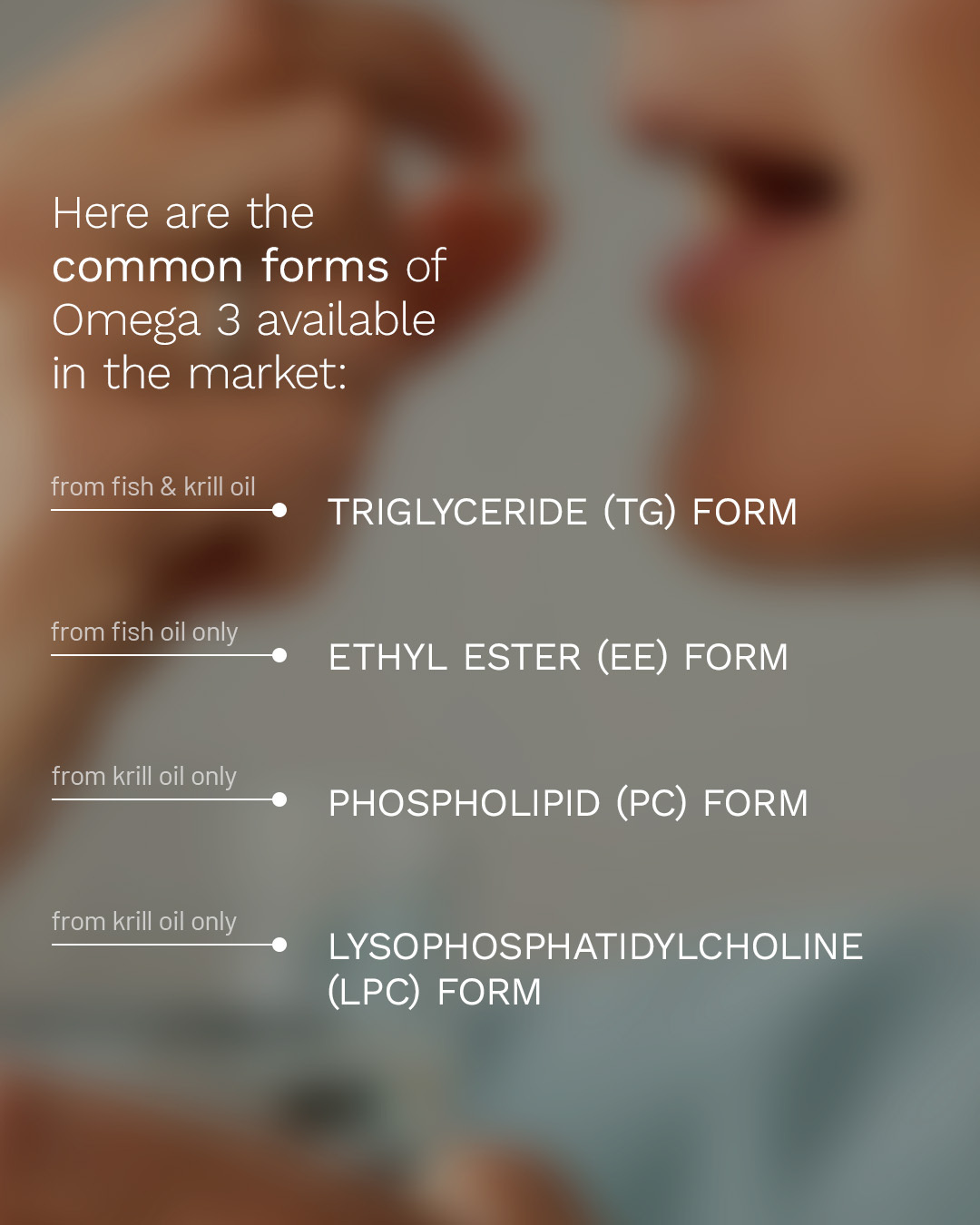
But here’s the short version. Every negative finding in the omega-3 brain literature involves standard supplement forms: triglycerides, ethyl esters, or phospholipids. These are the forms that cross the blood-brain barrier less efficiently. The DHA gets into the blood. It does not reliably get into the brain.
That is not the same as saying DHA does not matter for the brain. The Framingham data says it does. The question is how to get it there.
The brain’s preferred route – and why it matters
The brain does not take up nutrients passively. It sits behind a highly selective filter – the blood-brain barrier (BBB) – and it has a dedicated transporter for DHA, identified by a team at Duke-NUS in Singapore in 2014.6 This transporter, called MFSD2A, has a strong preference: it carries DHA when it arrives bound to a specific molecular carrier called lysophosphatidylcholine, or LPC. Standard supplement forms don’t use this route.
How important is this pathway?
The clearest answer comes from what happens when it fails entirely. Children born with mutations that disable MFSD2A cannot import DHA into the brain, and they develop a fatal condition marked by profoundly underdeveloped brains.7 That is the extreme case. But it confirms that this is not one of several optional routes. It is the brain’s primary doorway for DHA.
The scientific case for delivering DHA in the LPC form rests on this mechanism. The early preclinical results looked striking: a mouse study reported that LPC-DHA more than doubled brain DHA compared with standard forms, and was the only form associated with improvements in learning and memory.8 A follow-up study from the same group reported similar patterns in rats, including higher levels of BDNF, a protein the brain produces to strengthen neural connections.9
Then two independent laboratories tried to reproduce the brain DHA finding – and could not. One team replicated the original design as closely as possible. The other used a higher dose for longer. Neither found the same increase in brain DHA.10,11 The original study had also reported unusually low baseline DHA levels in control animals, which may have made the effect look larger than it was.
The memory and BDNF findings have not been directly challenged – but they have not been independently confirmed either, because the replication studies only measured brain DHA, not behaviour or BDNF. They remain single-programme results awaiting independent confirmation.
So where does that leave us? The brain’s preferred doorway for DHA is real and well characterized.7 What isn’t yet settled is how much more DHA actually gets through when you take the LPC form as a supplement. That is exactly the question an ongoing human trial is designed to answer.1
What you can do now – the structural playbook
Whatever the next trial shows, the Framingham data and the membrane biology point in the same direction: DHA status matters for the brain you will have in ten years.
Here is what is actionable now.
Eat oily fish regularly. Salmon, mackerel, sardines, anchovies, and herring are the richest dietary sources of preformed DHA. DHA from whole food sources arrives in a more varied set of molecular carriers than most supplements provide – including some phospholipid forms closer to what the brain’s transporter prefers. Singapore’s Health Promotion Board recommends choosing fish as your protein at least twice a week.
Know the limits of ALA. If your omega-3 comes mainly from flaxseed, chia, and walnuts, you’re getting ALA – which the body converts to brain DHA at a very low rate, particularly in men.13 These are valuable foods for other reasons, but they are not a reliable path to brain DHA on their own.
Move your body. Exercise independently supports brain volume, BDNF production, and cerebrovascular health. The Framingham participants with better brain outcomes were not just eating more fish – they tended to be more active, leaner, and metabolically healthier. DHA is one input into a structural system. Movement is another.
Protect your sleep. Deep sleep is when the brain clears metabolic waste and consolidates memory. Chronically poor sleep erodes the same cognitive functions – memory, executive function, sustained attention – that low DHA is associated with. The next post in this series covers this in detail.
Check the form, not just the dose. If brain health is your goal, the milligrams on the label are only part of the picture. The blood-brain barrier treats triglyceride, ethyl ester, phospholipid, and LPC forms of DHA differently – and that difference is exactly what the flat trials never tested.
Think in decades, not symptoms. The Framingham data showed associations between lower DHA status and smaller brain volumes in participants with a mean age of 46.3 By the time the effects become obvious in daily life, the structural undersupply may have been building quietly for a decade or more. The earlier you address it, the more brain structure there is to protect.
Where LPC Neuro fits
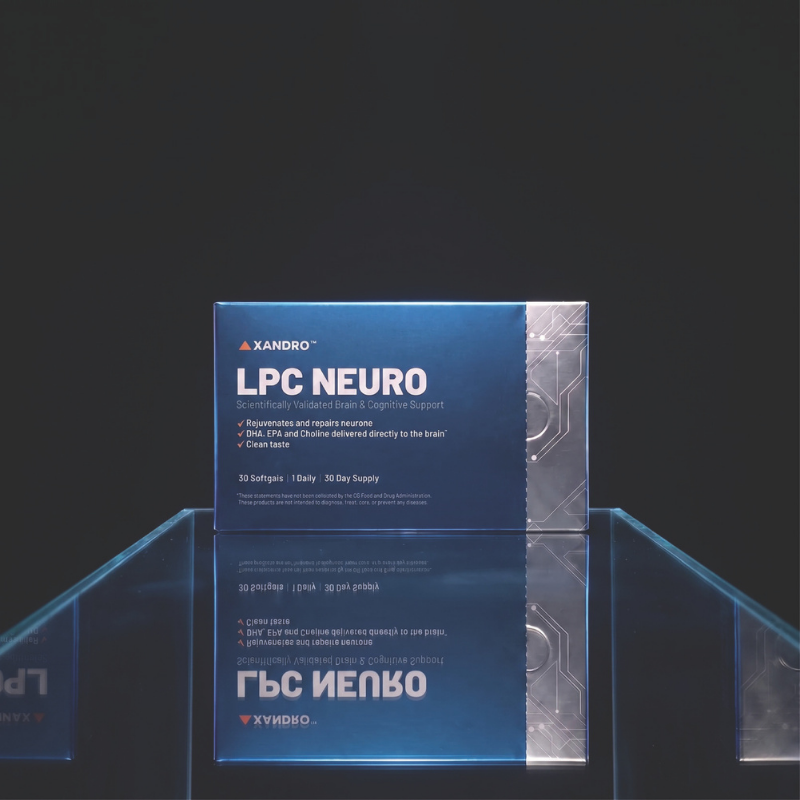
This is the problem our flagship omega-3 protocol was designed to address. LPC Neuro uses Lysoveta™ – a specialized LPC-DHA derived from Antarctic krill – to deliver DHA in the molecular form the brain’s MFSD2A transporter was built to carry. XANDRO® holds exclusive access to Lysoveta for Asia.
We are not going to overstate the evidence. The transport mechanism is established. The early preclinical results were promising but have not been independently replicated at the magnitude originally reported. A human trial comparing LPC-DHA against standard DHA is underway, and until those results are in, the delivery advantage is plausible, not proven.12
The honest case for LPC Neuro is not that the science proved everyone else wrong. It is this: if you‘re going to invest in getting DHA to your brain, it makes sense to use the form the brain’s own door is built to accept – as part of a life that already includes oily fish, a plant-rich diet, sleep, and movement.
LPC Neuro is one layer of a three-layer system. In the Cognitive Biocap framework introduced in the first post in this series, it addresses the “build” layer: the raw material your neurons are made from.
Neuro X addresses the daily “run” layer – focus, recall, and mental endurance under pressure. Sleep On addresses the overnight “repair” layer – the window where the brain clears waste, consolidates memory, and resets for the next day.
Feeding the brain the right building material while neglecting its daily operating conditions, or supporting daily performance while undermining the overnight recovery window, means progress in one area gets undone by neglect in another.
Also in this series
→ Your brain is your longest-running investment: Why cognitive decline isn’t inevitable
→ Why You Can’t Think Straight After a Bad Night – The Sleep-Cognition Connection
→ The Cognitive Cost of Chronic Stress – What Cortisol Does to Memory, Focus, and Decision-Making
Frequently asked questions
Can I get enough DHA from food alone?
If you eat two or more portions of oily fish per week, you are likely getting a meaningful amount of dietary DHA. For cardiovascular and general health, dietary DHA is well supported. For targeted brain support, the molecular form of delivery may matter – which is the question the ongoing research is trying to answer.
Is fish oil useless?
No. Standard fish oil raises circulating DHA and EPA effectively, and the cardiovascular, anti-inflammatory, and joint-health evidence is well documented. The limitation is specific to the brain: the blood-brain barrier does not take up the triglyceride and ethyl ester forms of DHA as readily as the LPC form. Fish oil remains a reasonable supplement for general health – it is not optimized for brain delivery.
There is also emerging evidence that EPA – the other main omega-3 in fish oil – may not be neutral for the brain in all contexts. A recent animal study found that EPA impaired cerebrovascular repair after repeated head injury,14 though this is a single preclinical finding and its relevance to everyday brain health in humans is not established.
What about algal oil for vegetarians?
Algal oil is a valid, sustainable source of DHA, typically in triglyceride form. Like fish oil, it raises circulating DHA reliably. The same blood-brain barrier limitation applies. LPC Neuro is not vegan – it uses bovine gelatin capsules and is derived from Antarctic krill – but it is Halal-friendly.
How is Lysoveta™ different from regular krill oil?
Standard krill oil delivers omega-3s primarily in phospholipid form, which may improve general absorption compared with triglyceride-based fish oil. However, phospholipid-DHA is not the LPC form the MFSD2A transporter at the blood-brain barrier preferentially accepts. Lysoveta is specifically enriched in LPC-DHA – the molecular form that matches what the transporter carries – making it distinct from both regular krill oil and fish oil for brain-targeted delivery.
At what age should I start thinking about brain DHA?
The Framingham data showed associations between DHA status and brain structure in a cohort with a mean age of 46.3 The brain’s need for DHA is lifelong. But midlife – the 40s and 50s – is when many of the modifiable factors linked to long-term cognitive health become most actionable, and when the effects of undersupply may start to be felt in daily performance.
Does LPC Neuro also support eye health?
DHA is highly concentrated in the retina, and the MFSD2A transporter also operates at the blood-retina barrier. Preclinical research from the same group that studied brain DHA suggests LPC-DHA may also be taken up by retinal tissue. This finding has not been independently replicated and should be considered preliminary.
This product is a health supplement. It is not intended to diagnose, treat, cure, or prevent any disease. Always consult a qualified healthcare professional before starting any supplement, particularly if you are taking prescription medications, managing a health condition, or are pregnant or breastfeeding.
References
-
- Bazinet RP, Layé S. Polyunsaturated fatty acids and their metabolites in brain function and disease. Nature Reviews Neuroscience. 2014;15(12):771–785. PMID 25387473. DOI: 10.1038/nrn3820. | Review (brain lipid composition; DHA structural and signaling roles in neurons).
- Tan ZS, Harris WS, Beiser AS, et al. Red blood cell omega-3 fatty acid levels and markers of accelerated brain aging. Neurology. 2012;78(9):658–664. PMID 22371413. DOI: 10.1212/WNL.0b013e318249f6a9. | Human observational study (Framingham; n = 1,575; mean age 67).
- Satizabal CL, Himali JJ, Beiser AS, et al. Association of red blood cell omega-3 fatty acids with MRI markers and cognitive function in midlife: the Framingham Heart Study. Neurology. 2022;99(23):e2572–e2582. PMID 36198518. DOI: 10.1212/WNL.0000000000201296. | Human observational study (Framingham; n = 2,183; mean age 46).
- Yassine HN, et al. CNS target engagement of high-dose DHA supplementation in older adults at risk for dementia: a randomized, double-blind, placebo-controlled trial. EBioMedicine. 2026;129:106316. PMID 42315445. DOI: 10.1016/j.ebiom.2026.106316. | Human RCT (CSF-confirmed target engagement; no cognitive or structural benefit at two years).
- Kang JH, et al. Marine n-3 fatty acids and cognitive change among older adults in the VITAL randomized trial. Alzheimer’s & Dementia (N Y). 2022;8(1):e12288. DOI: 10.1002/trc2.12288. | Human RCT (n = 4,218; no cognitive benefit).
- Nguyen LN, Ma D, Shui G, et al. Mfsd2a is a transporter for the essential omega-3 fatty acid docosahexaenoic acid. Nature. 2014;509(7501):503–506. PMID 24828044. DOI: 10.1038/nature13241. | Animal study (mice; MFSD2A identified as the major DHA transporter at the blood-brain barrier via LPC). Duke-NUS, Singapore.
- Guemez-Gamboa A, Nguyen LN, Yang H, et al. Inactivating mutations in MFSD2A, required for omega-3 fatty acid transport in brain, cause a lethal microcephaly syndrome. Nature Genetics. 2015;47(7):809–813. PMID 26005868. DOI: 10.1038/ng.3311. | Human genetic study with animal model validation.
- Sugasini D, Thomas R, Yalagala PCR, Tai LM, Subbaiah PV. Dietary docosahexaenoic acid (DHA) as lysophosphatidylcholine, but not as free acid, enriches brain DHA and improves memory in adult mice. Scientific Reports. 2017;7(1):11263. PMID 28900242. DOI: 10.1038/s41598-017-11766-0. | Animal study (mice; reported LPC-DHA more than doubled brain DHA; finding not reproduced in independent replication studies, refs 10–11).
- Sugasini D, Yalagala PCR, Goggin A, Tai LM, Subbaiah PV. Enrichment of brain docosahexaenoic acid (DHA) is highly dependent upon the molecular carrier of dietary DHA. The Journal of Nutritional Biochemistry. 2019;74:108231. PMID 31665653. DOI: 10.1016/j.jnutbio.2019.108231. | Animal study (rats; same research programme as ref 8; magnitude not independently replicated).
- Klievik BJ, Fu Y, Tyrrell AD, Chen CT, Metherel AH, Bazinet RP. Dietary phospholipid carriers of DHA do not increase brain DHA levels: a replication study. Journal of Lipid Research. 2025;66(11):100913. PMID 41016602. DOI: 10.1016/j.jlr.2025.100913. | Animal study (mice; direct replication of Sugasini 2017; no increase in brain DHA).
- Andriambelo B, Vachon A, Dansereau MA, Laurent B, Plourde M. Providing lysophosphatidylcholine-bound omega-3 fatty acids increased eicosapentaenoic acid, but not docosahexaenoic acid, in the cortex of mice. Prostaglandins, Leukotrienes and Essential Fatty Acids. 2024;201:102622. PMID 39642444. | Animal study (APOE3/APOE4 mice; higher dose, longer duration than Sugasini; no significant brain DHA increase).
- University of Cincinnati. Optimizing CNS DHA delivery in elderly adults at risk for dementia. ClinicalTrials.gov identifier: NCT06933095. First posted 2025. https://clinicaltrials.gov/study/NCT06933095. | Human RCT (recruiting; LPC-DHA vs standard DHA; independent academic trial).
- Burdge GC, Calder PC. Conversion of alpha-linolenic acid to longer-chain polyunsaturated fatty acids in human adults. Reproduction, Nutrition, Development. 2005;45(5):581–597. PMID 16188209. DOI: 10.1051/rnd:2005047. | Review (human; ALA to EPA/DHA conversion rates; sex differences).
- Karakaya E, et al. Eicosapentaenoic acid reprograms cerebrovascular metabolism and impairs repair after brain injury. Cell Reports. 2026;117135. PMID 41887219. DOI: 10.1016/j.celrep.2026.117135. | Animal study (mice; EPA impaired cerebrovascular repair after repetitive mild traumatic brain injury).
Tags: