

Why Your Cortisol Is Highest When You Most Need to Sleep
25th Jun 2026
Most people think of cortisol as a morning hormone. Under healthy conditions, that’s largely correct. Cortisol peaks sharply within the first thirty minutes of waking – a surge called the cortisol awakening response – mobilizing energy, sharpening focus, and preparing your body for the day ahead. By evening, it should have declined to near its daily low point, creating the hormonal conditions that allow sleep to begin.1
For a significant and growing proportion of adults under sustained stress, that evening decline does not happen.2 Cortisol stays elevated. And when it does, sleep – particularly the deep, restorative stages your body most needs – becomes the first casualty.
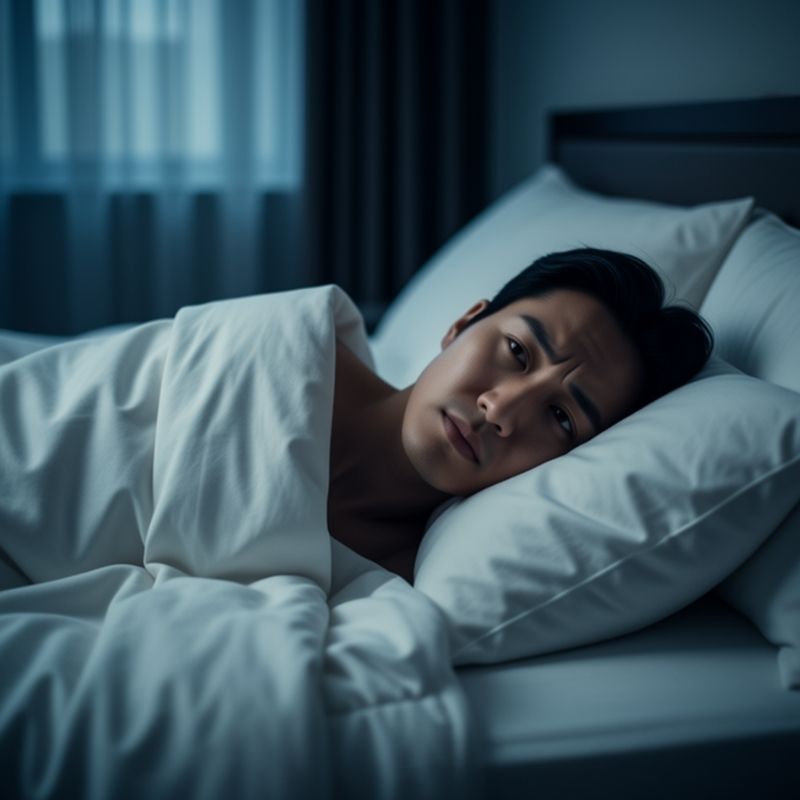
When cortisol stays elevated, sleep pays the price
Understanding why requires looking at the biology rather than the symptom. The problem isn’t simply that stressed people feel wired at night. It is that their nervous systems are following a hormonal instruction that says: it is not yet safe to sleep.
The normal cortisol rhythm – and what breaks it
Think of cortisol as your body’s daily energy schedule. In the morning, it surges – sharpening you for the day. Through the afternoon and evening, it gradually winds down, like a dimmer switch lowering the lights.
By the time you’re ready for bed, cortisol should be near its lowest point of the day, and that drop is one of the key signals that tells your nervous system it’s safe to shift from alert mode into rest-and-repair mode.1
The system that controls this schedule is called the HPA axis – short for the hypothalamic-pituitary-adrenal axis. This is the hormonal feedback loop that governs your body’s stress response, running from a region deep in the brain down to the adrenal glands that sit on top of your kidneys.
Under healthy conditions, this loop keeps cortisol on a predictable 24-hour cycle: high in the morning, low at night.
Under chronic stress, the HPA axis loses that precision. The dimmer switch stops working properly. Sustained psychological and occupational pressure – the kind that accompanies demanding schedules, high-stakes decisions, and the difficulty of mentally switching off from work – disrupts the feedback loop at multiple points. The evening cortisol decline flattens or stalls. Overnight cortisol spikes become more frequent. The hormonal cue to wind down becomes ambiguous, delayed, or absent. 1,3
The consequence is that your body remains in a state of low-grade readiness at the very hour it should be standing down. Not acutely stressed, but not biologically permitted to rest. The lights are supposed to be off, but the dimmer is stuck halfway.
A comprehensive review in the Journal of Clinical Endocrinology and Metabolism documents how HPA axis dysfunction at this level directly interferes with sleep, linking elevated evening cortisol to longer time to fall asleep, more frequent overnight awakenings, and reduced time in slow-wave sleep.1
Work stress is a major contributor
A study of over 5,700 employed adults found that high work demands and, specifically, the inability to stop thinking about work during free time were the strongest predictors of disturbed sleep – stronger than physical exertion, gender, or lifestyle factors.3
This matters whether you are a professional protecting cognitive output across a long week or someone in your fifties who simply wants to wake up clear-headed again. The biology is the same. So is the fix.
Why cortisol specifically targets deep sleep
This is the part most people don’t know. Cortisol doesn’t simply make it harder to fall asleep. It hits the deepest stages of non-REM sleep hardest – the slow-wave sleep where your body does its most intensive repair work.1
Stage N3, also called deep sleep or slow-wave sleep, requires your nervous system to shift into its calm, restorative mode. Elevated cortisol actively works against that shift. Your nervous system cannot simultaneously maintain the hormonal alertness cortisol signals and the inhibitory, restorative conditions that deep sleep requires.1
The result is a pattern many stressed adults recognize: sleep that appears adequate in duration but is shallow in quality. Time in bed passes. Lighter stages cycle. But the deep phase that drives physical repair, overnight brain housekeeping, immune function, and metabolic restoration is cut short or bypassed entirely. See our article on why sleep quality matters more than sleep duration for a fuller account of what deep non-REM sleep does – and what is lost when it doesn’t complete.
You wake having slept, but without the restoration that sleep was supposed to deliver. The tracker shows eight hours. Your body tells a different story.
The feedback loop that makes it worse
What makes cortisol-driven sleep disruption particularly difficult to break is that it feeds itself. High evening cortisol keeps your sleep shallow. Shallow sleep – particularly when you lose the deep stages – stops your body from resetting cortisol back to its normal rhythm the following day. Which then makes the next night's sleep shallow again.
This works in both directions: your body needs deep sleep to reset cortisol, but high cortisol is exactly what prevents deep sleep from happening.1 For people under sustained work stress or chronic psychological pressure, this cycle can persist long after the original stressor has passed.
This is why good sleep habits alone – limiting screens, keeping a consistent schedule, following a wind-down routine – can only take you so far. They are genuinely useful and worth doing. But they do not break the hormonal cycle. When cortisol is the problem, the cortisol needs to be addressed directly.
High work demands and the inability to switch off from work
are the strongest predictors of disturbed sleep
Why sedatives don’t solve a cortisol problem
Most sleep aids – whether prescription, over-the-counter, or popular calming supplements – work by making you drowsy. They help you fall asleep or stay asleep by quieting brain activity. What they do not do is lower cortisol, fix the timing of your stress hormones, or address the reason your body is staying alert in the first place.
It gets worse. As we explored in our piece on melatonin and sleep science, some sedative approaches can work against deep sleep rather than supporting it.1 Even melatonin at high doses may not improve the quality of the sleep you get. If cortisol is already keeping your sleep shallow, adding a sedative on top is solving the wrong problem.
The real question is not how to override wakefulness from the outside. It’s how to bring cortisol back down so your body can do what it already knows how to do: sleep deeply on its own.
The adaptogen approach – what it actually means
The term adaptogen gets used loosely in supplement marketing. In clinical terms it refers to a class of plant-derived compounds studied for their ability to help the body regulate its own stress response – not by stimulating and not by sedating, but by supporting the systems that are supposed to bring cortisol back to normal on their own.
That is a different goal from sedation. Instead of knocking you out on top of the cortisol problem, an adaptogen works to lower the cortisol itself. The result is not drowsiness. It is your body returning to the state where sleep can happen naturally – because the hormonal signal that was keeping you alert has quieted down.
Holy Basil or Tulsi (Ocimum tenuiflorum) is one of the most rigorously studied adaptogens in this context. In preclinical research (animal and cell-based studies, not yet confirmed in humans), Holy Basil and its active compounds have been shown to work at three specific points in the stress-hormone chain: they reduce cortisol release from the adrenal glands, they block a receptor that triggers the stress response in the first place, and they inhibit an enzyme that reactivates cortisol in your tissues.4
In other words, it targets the cortisol pathway at multiple levels, rather than simply making you sleepy.
The clinical evidence: Holixer® Holy Basil
Holixer® is a standardized Ocimum tenuiflorum extract (dosed at 125 mg twice daily) tested in an 8-week randomized, double-blind, placebo-controlled trial in 100 adults experiencing stress. Across the primary outcomes, the Holixer group outperformed placebo.6
Perceived stress, measured by the Perceived Stress Scale, improved significantly more in the Holixer group over the 8 weeks.
Insomnia severity, measured by the Athens Insomnia Scale, also improved significantly more in the Holixer group. This is a directly relevant finding: the people in this study were stressed adults, not a clinical insomnia cohort, making the sleep outcome a real-world representation of the cortisol-driven pattern described in this article.
Hair cortisol at week 8 was lower in the Holixer group compared to placebo. Hair cortisol captures cumulative stress hormone output over weeks, not a single moment. A difference here points to a sustained shift in how the body is managing cortisol, not a one-off hormonal dip.
Sleep efficiency showed a trend toward improvement over time in the Holixer group, though the between-group difference did not reach statistical significance. The supplement also demonstrated a buffered response to acute laboratory stress exposure. Holixer was well tolerated across the full trial, with no major adverse events reported.5
Holixer's safety profile has been independently tested to international laboratory standards. No signs of genetic toxicity were found across a full panel of tests, and no adverse effects were observed at doses far exceeding any supplement use.5
Your body needs deep sleep to reset cortisol.
But high cortisol is what prevents deep sleep.
What you can do about high evening cortisol
If you suspect cortisol is behind your sleep difficulty, a few practical points follow directly from the evidence above:
Be honest about the problem. If you sleep through the night but wake unrested, the question is not how to sleep longer. It is what is keeping your sleep shallow. For many stressed adults, the answer starts with cortisol.
Recognize the ceiling of behavioral approaches. Limiting screens, keeping a consistent schedule, and following a wind-down routine are genuinely useful. But if cortisol is the problem, these strategies alone will not break the cycle. The cortisol needs to be addressed directly.
Know why sedatives are the wrong trade. A sleep aid that makes you drowsy without lowering cortisol can actually make things worse by pushing your sleep even shallower. Address what is keeping you awake, not just the fact that you are awake.
Look for stress-regulation, not sedation. Adaptogens like Holy Basil work by helping your body bring evening cortisol back down on its own. The result is not drowsiness – it is your body returning to the state where sleep can happen naturally.
Give it time. Some people notice improvements in stress and sleep quality within the first few weeks, but the full cortisol-lowering effect builds with consistent use.
Talk to a professional if it persists. Chronic sleep disruption driven by stress is worth discussing with a qualified healthcare professional, particularly if you take other medications or manage a health condition.
Why protecting sleep is protecting your Biological Capital
The damage from cortisol-driven sleep disruption is not limited to the next morning. Every night your body fails to reach deep sleep, the repair work that was supposed to happen during that window does not get done. Tissues that needed recovering, metabolic processes that needed resetting, cognitive processing that needed completing – all of it gets deferred.
That deferral has a cost, and the cost compounds. Your Biological Capital (Biocap) – the cognitive sharpness, physical capacity, and resilience you draw on every day – depends on deep sleep to maintain itself. When cortisol keeps your sleep shallow night after night, you are not just losing rest. You are losing the overnight maintenance cycle that keeps those assets functioning at the level your life demands.
This is what makes the cortisol-sleep cycle more than a comfort issue. It is an erosion pattern. And unlike a bad night you bounce back from, a pattern of shallow sleep driven by a stuck hormonal signal does not self-correct. It requires addressing the driver – not adding another layer of sedation on top.
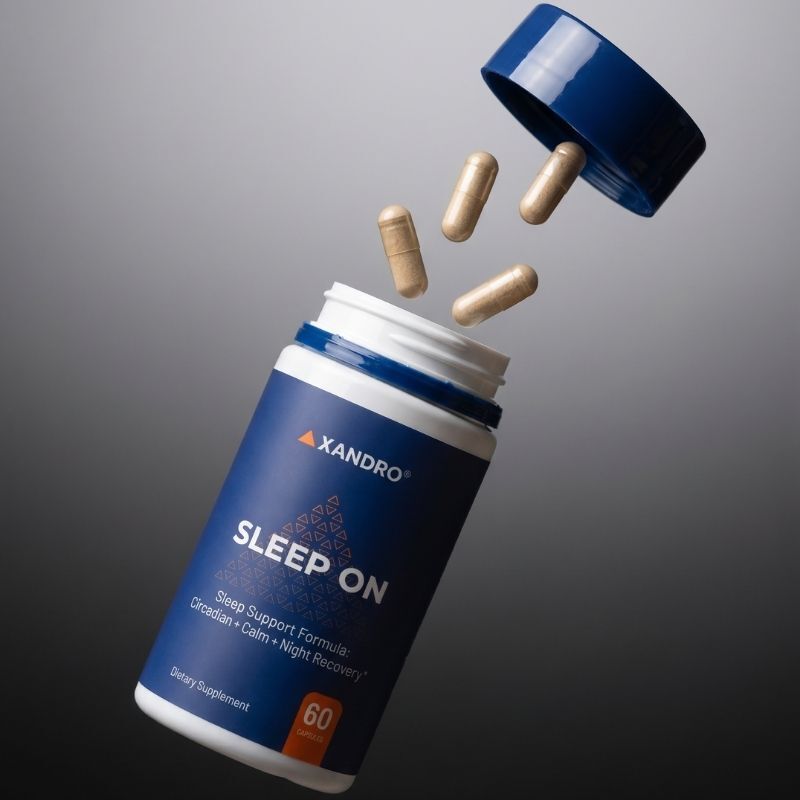
A smarter approach: addressing the cortisol problem directly
Our sleep-support protocol Sleep On takes a different approach. Instead of sedating you into sleep, it works on three separate reasons your sleep is broken – each with a different ingredient targeting a different piece of the problem.
Holixer® Holy Basil – the cortisol pathway. The ingredient that addresses the problem this article is about: the elevated evening cortisol that keeps your body alert at bedtime and prevents deep sleep from happening.5
Melostacio™ (1 mg phytomelatonin) – the timing pathway. Chronic stress gradually blunts your body's own melatonin signal. A low dose of natural melatonin from pistachio tops that signal back up rather than flooding the system. In a randomized, placebo-controlled trial, Melostacio supplementation was associated with reduced insomnia scores and lower cortisol levels.7
GABA – the calming pathway. Your brain's primary quieting signal, supporting the shift from alert to restful at bedtime, independently of what cortisol is doing. A human trial found that 100 mg shortened the time taken to fall asleep.8
Each ingredient does a different job. Holixer does not attempt to do what the other two do. Neither of them can do what Holixer does. For the full three-mechanism framework, read about why you can't sleep even when you're exhausted.
None of it is sedation. All of it is working with your body rather than against it.
The short version
If you sleep through the night but wake unrested, the question is not how to sleep longer. It is what is keeping your sleep shallow. For many stressed adults, the answer starts with cortisol – and specifically with a stress-response system that has stopped winding down when it should.
Sedatives do not fix a cortisol problem. They work around it and, by pushing sleep even shallower, can make it worse. Addressing the cortisol directly – with clinical evidence behind the approach – is what separates sleep support that actually restores from sleep support that merely passes the night. Protecting sleep is one of the foundations of building Biological Capital, and it is worth getting right.
Also in this series
Tired But Wired? Why You Can't Sleep Even When You're Exhausted
Still Tired After 8 Hours? The Science of Deep Sleep Quality vs Duration
Does Melatonin Work for Sleep? What the Evidence Actually Says
Frequently asked questions
Why is my cortisol high at night?
Under chronic stress, your body's stress-response system – the HPA axis – can lose its normal daily rhythm. Rather than winding down through the evening toward its overnight low, cortisol stays elevated, keeping you in a state of low-grade alertness. This is not just about feeling anxious. It is a hormonal pattern driven by sustained stress load, and it can persist long after the original stressor has passed.
Can high cortisol cause sleep problems?
Yes, and it targets the sleep you need most. Elevated evening cortisol delays sleep onset, increases overnight awakenings, and hits deep sleep hardest – the stage where your body does its most intensive repair work. The result is often sleep that lasts long enough on paper but leaves you unrested in the morning.
What is the connection between cortisol and deep sleep?
Your body can’t be in alert mode and deep-sleep mode at the same time. Stage N3 – the deepest phase of sleep – requires your nervous system to shift fully into its calm, restorative state. Cortisol works directly against that shift. This is why stress-driven sleep problems typically show up not as inability to sleep, but as sleep that is shallow, fragmented, and missing the deep restoration that makes the difference.
Does poor sleep raise cortisol the next day?
Yes. Your body needs deep sleep to reset cortisol back to its normal rhythm. When that sleep does not happen, cortisol stays elevated the following day, which then disrupts the next night. This is why the cycle is so difficult to break through better sleep habits alone – it is being driven from both directions.
What are adaptogens and how do they affect cortisol?
Adaptogens are plant-derived compounds that help your body regulate its own stress response – without stimulating you and without sedating you. In the context of sleep, adaptogens like Holy Basil work by supporting the feedback systems that are supposed to bring evening cortisol back down on their own. The result is not drowsiness. It is your body returning to the state where sleep can happen naturally.
Is Holy Basil the same as ashwagandha?
No. Both are adaptogens that work through the stress-response system, but they are different plants with different mechanisms and different evidence behind them. The clinical evidence for Holixer Holy Basil includes direct measurement of cortisol, insomnia severity, and perceived stress in a randomized, double-blind, placebo-controlled trial specifically conducted in stressed adults – making it directly relevant to the cortisol-sleep pattern this article describes.
How long does it take for cortisol-regulating adaptogens to work?
This is not an overnight fix. Your body's stress-response system recalibrates gradually as it is consistently supported. Some people notice improvements in stress and sleep quality within the first few weeks. The full measured effect on cortisol builds over time with consistent use.
This product is a health supplement. It is not intended to diagnose, treat, cure, or prevent any disease. Always consult a qualified healthcare professional before starting any supplement, particularly if you are taking prescription medications, managing a health condition, or are pregnant or breastfeeding.
References
-
- Buckley TM, Schatzberg AF. On the interactions of the hypothalamic-pituitary-adrenal (HPA) axis and sleep: normal HPA axis activity and circadian rhythm, exemplary sleep disorders. Journal of Clinical Endocrinology and Metabolism. 2005;90(5):3106–3114. PMID: 15728214. DOI: 10.1210/jc.2004-1056.
- Piao X, Xie J, Managi S. Continuous worsening of population emotional stress globally: universality and variations. BMC Public Health. 2024;24(1):3576. PMID: 39716139. DOI: 10.1186/s12889-024-20961-4.
- Akerstedt T, Knutsson A, Westerholm P, Theorell T, Alfredsson L, Kecklund G. Sleep disturbances, work stress and work hours: a cross-sectional study. Journal of Psychosomatic Research. 2002;53(3):741–748. PMID: 12217447. DOI: 10.1016/s0022-3999(02)00333-1.
- Jothie Richard E, Illuri R, Bethapudi B, Anandhakumar S, Bhaskar A, Chinampudur Velusami C, Mundkinajeddu D, Agarwal A. Anti-stress activity of Ocimum sanctum: possible effects on hypothalamic-pituitary-adrenal axis. Phytotherapy Research. 2016;30(5):805–814. PMID: 26899341. DOI: 10.1002/ptr.5584.
- Lopresti AL, Smith SJ, Metse AP, Drummond PD. A randomized, double-blind, placebo-controlled trial investigating the effects of an Ocimum tenuiflorum (Holy Basil) extract (Holixer™) on stress, mood, and sleep in adults experiencing stress. Frontiers in Nutrition. 2022;9:965130. PMID: 36185698. DOI: 10.3389/fnut.2022.965130.
- Murugan SK, Bethapudi B, Mundkinajeddu D, D’Souza P. Assessment of genotoxicity and acute oral toxicity of a standardized Ocimum tenuiflorum extract (Holixer™). Drug and Chemical Toxicology. 2025;48(3):530–539. PMID: 39610007. DOI: 10.1080/01480545.2024.2429619.
- Shivaprasad HN, et al. A clinical evaluation of the safety and efficacy of Melostacio Gold™ (pistachio extract) to manage stress and improve sleep quality: a randomized, double-blind, parallel, placebo-controlled trial in adults. Pharmacognosy Research. 2025;18(1):97–104.
- Yamatsu A, et al. The improvement of sleep by oral intake of GABA and Apocynum venetum leaf extract. Journal of Nutritional Science and Vitaminology. 2015;61(2):182–187. PMID: 26052150. DOI: 10.3177/jnsv.61.182.